HU
HU


We spoke to our club’s sporting director, Nemanja Nikolics, about the difficulties of recent times, the transfer window, the first five matches and the criticism from the fans.
In most cases, the sporting director puts together the squad in the knowledge that the owner sets the club’s objectives before the start of the season. At Vidi, however, it was still unclear this summer who the owner would be at the start of the season. How were you able to build a team under these circumstances?
This was indeed a major challenge. I had to put the squad together over the summer without any clearly defined objectives, as it wasn’t even known who would ultimately own the club. What’s more, right up until the last minute, it was unclear what the Hungarian Football Association’s (MLSZ) central funding would look like this season. At the start of the transfer window, everyone knew the club was up for sale. At the same time, we had no information whatsoever as to whether the players we wanted to sign would fit into the future owner’s plans. I proceeded on the basis that, until a new owner was in place, I would have to consult the current owner about the players we had identified. I must emphasise that I have a very good relationship with the city, as the owner, and I receive every support from the mayor.
So the question wasn’t just who you could sign, but also what sort of Videoton you should be building?
Yes. My aim was to put together a competitive squad by the 15th August. I had to manage all this whilst also reducing the team’s wage bill at the current owner’s request: the current basic wage bill is more than twenty per cent lower than it was a year ago. The next step would have been to further strengthen the squad during the final three weeks of the transfer window, within the financial constraints set by the new owner. I tried to adapt as best I could to this particular situation.
From the outside, supporters may get the impression that, over the past few weeks, there have been constant changes regarding who might take over the club and when. Is the picture much clearer from the inside?
To be honest, we’re taking it week by week; we can’t see much further ahead, so it’s very difficult to make plans. On 1 July, following the announcement of the results of the local authority tender, it was expected that the club would have a new owner by 15 August at the latest. Yet here we are at the end of August, and the club still has no new owner, whilst there are several possible scenarios regarding the future.
Whilst reports regarding the identity of the prospective owner have been changing, you’ve had to convince the players that it’s worth choosing Videoton. How much did this complicate the negotiations?
Naturally, the players were also wondering: what can they expect in the long term? It was an interesting situation in that I was negotiating with them, but at the same time it was impossible to know what the new owner’s plans would be for the sporting management or who he would be counting on in the future. Honest, open communication is very important to me. I spoke frankly with every player, both new and established; I didn’t make any false promises to anyone. We’ve managed to sign players who fit in with our vision, both professionally and personally. We were able to reach agreements with several such players in good time, well before the start of the season. I also consider it important feedback that there were those who chose Videoton over offers from first division clubs in the NB I. Even players with significant first division, international or even national team experience decided that they wanted to help Videoton. These players do not show their respect for the club by kissing the club badge on the shirt– that wouldn’t be genuine of them anyway. They have demonstrated their respect by committing, despite all the uncertainty, to fighting for Vidi’s success whilst wearing the Vidi shirt.
After five rounds, however, our record stands at two wins and three defeats. The circumstances may be difficult, but the fans still hold the team to account for these results.
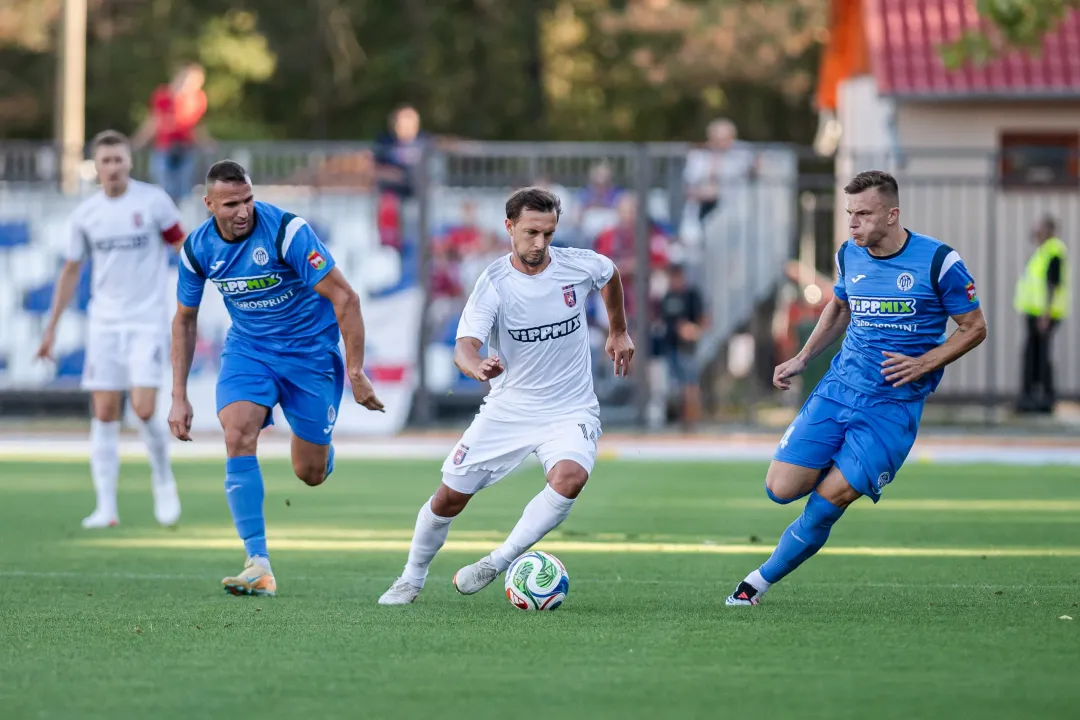
And that’s only right. We aren’t satisfied with this record either. It’s clear that our performance is judged primarily on the basis of results. It’s difficult to assess the team’s performance entirely objectively at times like this, because in none of our defeats were we outplayed by the opposition. In Kazincbarcika, we created scoring chances one after the other; realistically speaking, we should have scored more goals there. We also had plenty of chances against Mezőkövesd and scored a perfectly legitimate goal, which was disallowed.
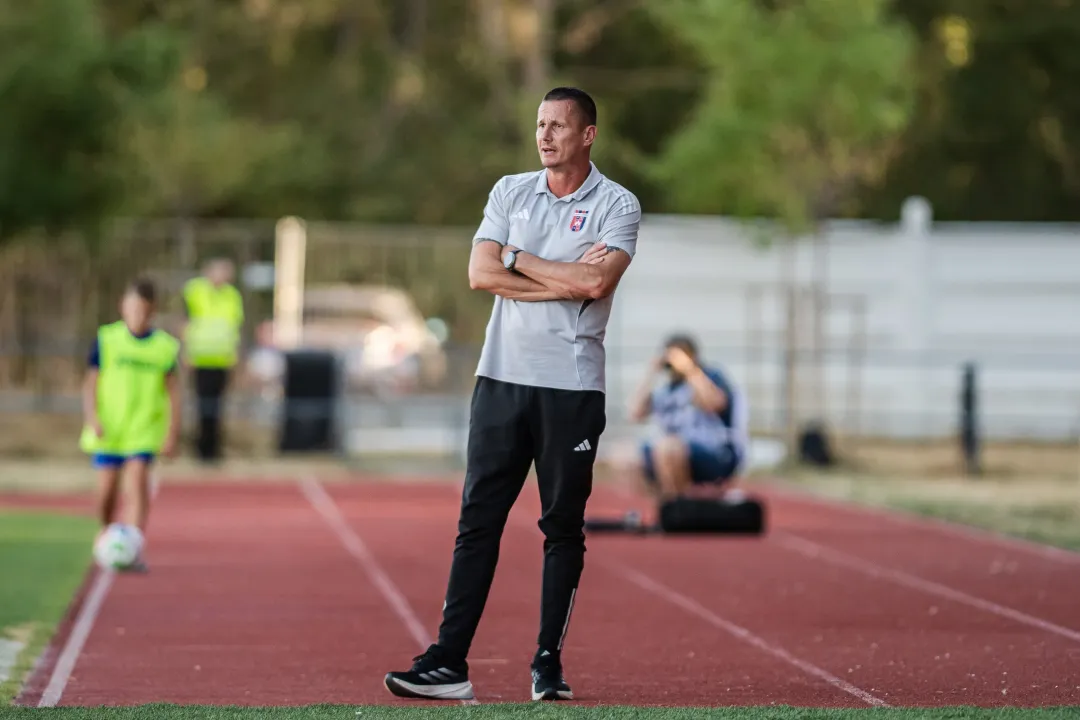
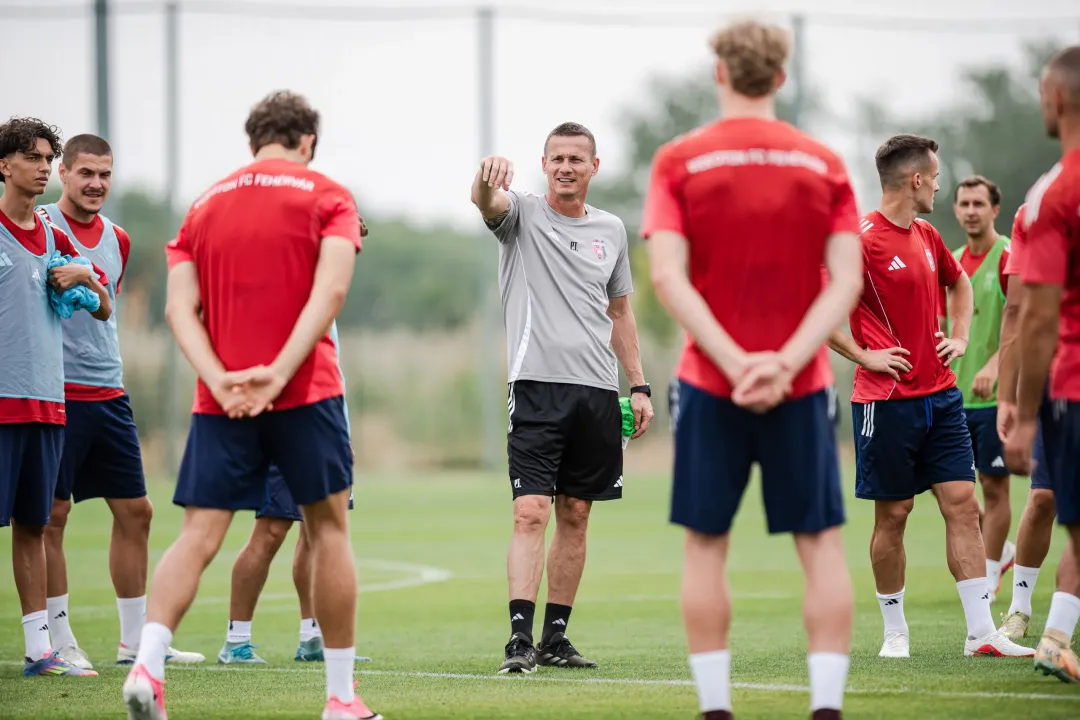
At the end of the day, however, the fans are only interested in the league table, and the fact is that we’ve dropped points in the final minutes of three league matches. Can this be put down to bad luck? I wouldn’t call it that. A lack of concentration and a failure to take responsibility led to us dropping points in the final minutes of three league matches. I take primary responsibility for the results, and just as I do, the coaching staff and the players know that the best way to respond to criticism is through good results. At the same time, we cannot ignore the circumstances under which the team is preparing. The players are human beings too; they read the news, and they see and sense everything that is happening around the club. Perhaps it is no coincidence that we are picking up so many yellow and red cards, nor that we have repeatedly lacked the necessary concentration in the final minutes. Isn’t it a dangerous excuse to cite uncertainty about the future? I have no intention whatsoever of making excuses for the team. As professional footballers, the players must try to block out external circumstances, and we’ll give them every support they need to cope with this pressure. But the fact remains that this situation exists, and I think it would be a mistake to act as if it had no effect on people. The fans only see the 90 minutes at the weekend, but I’m there at every training session and tactical meeting, so I know just how much work and effort the team puts in on a daily basis. In none of the matches have I felt that the opposition wanted the win more, or did more to achieve it. We create chances in matches, but the goals aren’t coming, so the question arises: do we need another striker? It’s no secret that we definitely wanted to, and still want to, strengthen our forward line. Last week, it looked as though we’d manage to sign a former international and excellent striker, but in the end, this hasn’t happened yet, again due to the uncertainty surrounding the club. Do you feel the fans’ criticism is justified? If the criticism is justified, I will of course accept it. In this situation, however, when there are so many uncertainties surrounding the club, it is particularly important for the club management, the team and the fans to pull in the same direction. This does not mean that we cannot be criticised. We must take responsibility for our results. But it must also be recognised that the current situation is not ideal for achieving good results; I say this whilst acknowledging that the current owner, the local council, really does provide everything we need. But there is the uncertainty and the human factor that we have already discussed. When three matches slip away in the closing stages, the head coach’s responsibility inevitably comes under scrutiny amongst the supporters. Is confidence in Tamás Pető still unshaken? Last autumn, Tamás Pető and I took over the team in a very difficult situation; at the time, they were in the bottom third of the table. What’s more, we didn’t hesitate for a moment to take on the role for just half a year, with the aim of stabilising the team’s position in the table and ensuring we avoided relegation. I know that Vidi means a great deal to Tamás – just as it does to me – and we work every day to ensure the club returns to the top as soon as possible. For us, this is a matter of honour. In the spring – apart from the last few matchdays – the team performed excellently. With this, Tamás Pető has earned the club’s trust and deserves a longer-term contract. There are a host of factors behind the goals conceded in the dying minutes, which I have spoken about previously. These cannot simply be put down to the head coach. It never even crossed the minds of the current club management that Vidi would not continue the league campaign with Tamás Pető. Over the past fifteen years, a great many managers have come and gone at the club, and on average they didn’t even spend a full year on the bench. I don’t consider this a good approach and I don’t believe in making hasty decisions. I believe in consistent, dedicated work and in trust; for my part, I have complete confidence in the coaching staff and the players. There are several members of the coaching staff who have been working for the club for more than ten years; whilst this is no guarantee of success, as a young sports director I would like to stand by those professionals who did not turn their backs on the club even during the most difficult times. I also feel it is important to highlight our youth coaches, who have stood by us for a long time and work every day to ensure that the children playing football with us receive the right training. In recent years, the club has given several professionals working in our youth setup the opportunity to prove themselves within the first-team coaching staff. What will it take for our results to take a turn for the better? We are facing a very important period. We have three league matches and one cup tie ahead of us before the international break. It will take a lot of hard work and a great deal of teamwork for us to succeed together, because we are Videoton. We have one goal – but we can only achieve it together.

Author: David Rechnitzer